Starting a Community Allotment in Fenland: A Beginner's Guide
How to find land, raise money and organise a community allotment in Fenland, from the first meeting to the...

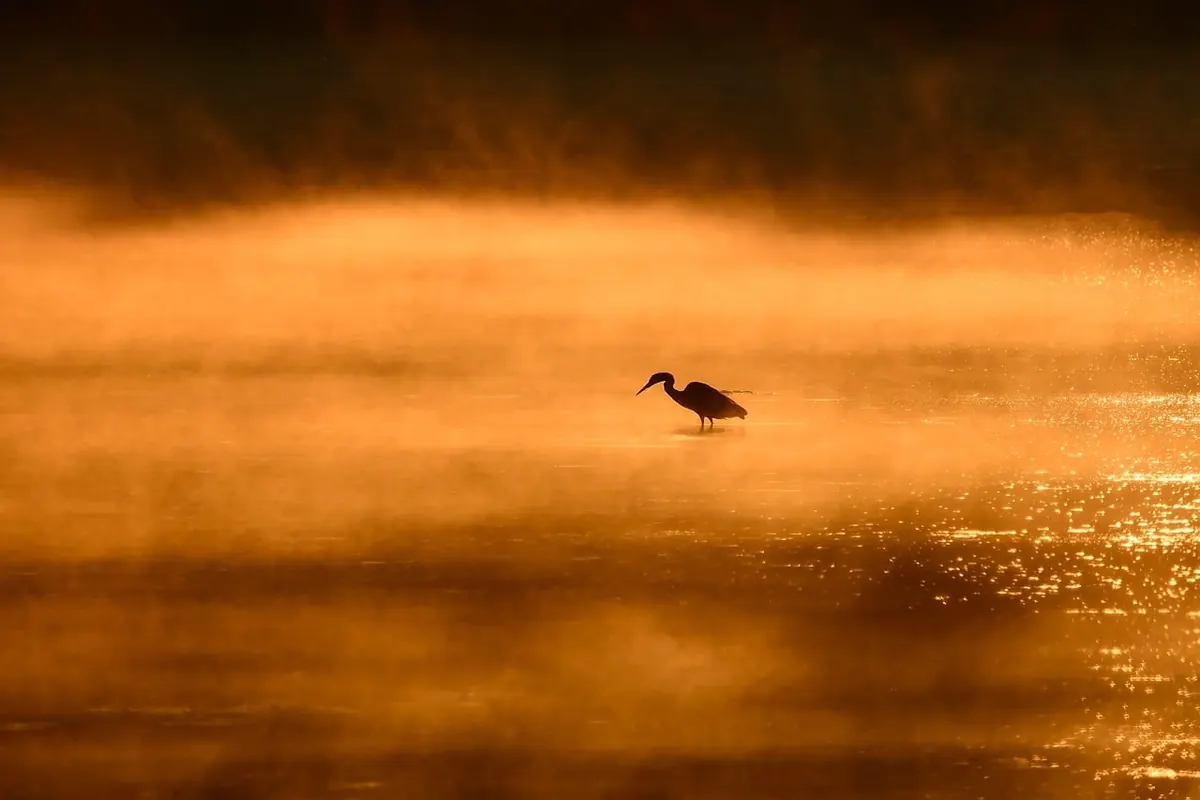
Stand on the bank at Holme Fen and the land drops away in a way that barely seems possible in lowland England. You are below sea level, looking out over fields that were drained two centuries ago and are now being slowly, deliberately, made wet again. That reversal — undoing some of the most thorough drainage in the country — is the whole point of the Great Fen.
It is one of the largest wetland restoration projects in England. It sits between Peterborough and Huntingdon, it has already been running for years, and it will still be running when most of us have moved on. What follows is what the project actually involves, and what it means if you live in Ramsey, Warboys, Sawtry, Yaxley or anywhere else on its edge.
The Great Fen is a partnership, led by the Wildlife Trust for Bedfordshire, Cambridgeshire and Northamptonshire, with Natural England, the Environment Agency and local councils alongside. Two national nature reserves sit at its heart, and both have history.
Woodwalton Fen was bought by Charles Rothschild in the early twentieth century; his purchase helped set in motion the movement that became today's Wildlife Trusts. Holme Fen is famous for a different reason. In 1851, wooden posts were driven into the ground there to measure how fast the drained peat was shrinking. They still stand, and the ground around them has fallen so far that the posts now tower overhead — a neat little monument to an enormous mistake.
The plan is to join those two reserves together with restored wetland across roughly 3,700 hectares, about 9,000 acres, so that wildlife is no longer stranded on isolated fragments. It is not one dramatic flood. Land is bought in parcels as it comes up for sale and rewetted piece by piece, which is why the project is measured in decades rather than years.
Peat is compressed plant material, laid down over thousands of years. Drain it and air gets in. The peat oxidises, carbon escapes into the atmosphere and the surface shrinks. You can see the result at Holme Fen: the soil that made this some of the finest vegetable-growing land in the country is quite literally disappearing. At Holme Fen, the peat has shrunk by around four metres in places since the posts were put in — a loss that is hard to visualise until you stand next to them.
Rewetting slows that process down. It also opens up an awkward question — what do you grow on land you have deliberately made wet? The project has been testing "wet farming" crops such as reeds and sphagnum, the moss that builds peat. It is early work, and nobody is pretending it replaces the arable acreage that has gone. But it is a more honest answer than leaving the soil to blow away down the drains. There is a word for this kind of farming: paludiculture, from the Latin for marsh. It is not yet a mainstream business, but it is one of the few ways to keep wet land productive without tearing the peat apart.
Holding water in a landscape engineered to shed it is harder than it sounds. The fen is divided into compartments, with bunds, ditches, sluices and pumps controlling where water sits and how deep it gets. Some of it comes from rain; some arrives through the drainage network. In winter, the pumps may run to keep levels from getting too high. In summer, they may run to bring water in. It is a constant balancing act, and it depends on electricity, maintenance and people who know which sluice to open.
Summer is the real test. The fen needs water most when the Fens are driest, and there is never quite as much as the project would like. Water quality matters too, because water arriving from surrounding farmland carries nutrients that suit nettles and rank grass far better than they suit delicate fen plants. That is why you will see grazing animals, mowing and reed cutting going on — habitat like this does not stay open on its own.
Cranes, for a start. The bird was absent from the Fens as a breeding species for centuries, and the Great Fen is now one of the places it uses. Add bitterns, marsh harriers, hobbies hunting dragonflies over the ditches in summer, otters on the larger drains and water voles where the banks suit them.
The less photogenic side matters just as much. Woodwalton Fen has long been noted for its invertebrates, and a wetter, bigger landscape gives those species room to spread rather than clinging on in one corner. The rare fen violet, a plant that survives in only a handful of British sites, is one of the species that has hung on here. So have specialised beetles, moths and snails that need wet peat and clean water. Be careful with expectations, though. Some species return quickly once water and grazing are right. Others need decades, and a lot more wet ground, before they turn up at all.
The project changes the neighbourhood, and not only for the birds. In practical terms, living nearby now means:
Not everyone agrees with every decision. Some worry about the loss of productive farmland, the cost to the public purse, or changes to drainage that affect neighbouring land. The project's answer is that the peat was going to disappear anyway, and that a wetter landscape is more sustainable in the long run — for carbon, for wildlife and for flood storage. That argument does not convince everybody, and it is not meant to. It is part of a long conversation about what this landscape is for.
It is tempting to imagine the Great Fen as a return to some primeval swamp. It is not. It is a managed landscape, and it needs people to keep it that way. Cattle graze the wet meadows in summer, hay is cut from some fields, and reeds are harvested for thatching. Without that management, the open fen would scrub over and much of the wildlife would disappear.
That is why the project talks about a "working fen" as much as a wild one. Wet farming, conservation grazing and reed cutting are all attempts to make wet land pay its way. They will not replace the vegetable fields that once thrived here, but they offer a future for land that would otherwise be too wet to plough and too valuable to abandon.
The Great Fen is not a museum piece. It is a working experiment in how to live with wet land again.
There are several ways in. Woodwalton Fen has a small car park and a network of paths through reedbed and woodland. Holme Fen has the famous posts, birch woodland and open views. Information points in Ramsey and Yaxley can set you on the right track, and the wider Great Fen is crossed by public footpaths and bridleways.
Spring is best for birdsong and emerging insects. Summer brings dragonflies and damselflies over the ditches, along with hobbies hunting them. Autumn is when cranes gather and the reedbeds turn gold. Winter can be quiet, but it is a good time for short-eared owls and large flocks of wildfowl. Bring wellies, binoculars and a map, and stick to marked routes — the wet ground is not always as solid as it looks.
If you want to do more than visit, volunteering is straightforward. Local groups carry out practical conservation tasks, wildlife surveys and visitor events. You do not need to be an expert. You just need to be willing to get muddy and learn as you go. For many people
Photo: aszak / Pixabay
How to find land, raise money and organise a community allotment in Fenland, from the first meeting to the...
A month-by-month guide to Fenland farmers' markets, from spring rhubarb and asparagus to autumn potato...
A practical Fenland guide to spotting invasive plants and animals in local drains and rivers, recording...